


Young people face high burden of death and disability from road crashes
Road crashes remain the leading cause of death for young people, according to the Global Burden of Disease Study.
More than 1.3 million people lost their lives in road traffic crashes and almost 51 million were injured, the study, published in The Lancet in July, finds. The leading cause of death for young people aged 10-35, and the second leading cause for children aged 5 to 9, the toll from road traffic collisions has remained stubbornly consistent. Echoing findings from the World Health Organization, the GBD study tracks significant casualty reductions in high income countries, offset by rapidly rising deaths and injuries in low income, motorising, nations.
Globally, road injuries ranked as the 11th cause of death and accounted for 75.3 million disability-adjusted life years (DALYs), a measure of total health loss that combines years of life lost to early death and years lived with disability. Low-income countries had nearly six times the rate of years lost to premature death as high-income countries.
Based on the Global Burden of Disease (GBD) 2023 study, the research analysed road traffic injury trends across 204 countries and territories between 1990 and 2023, providing what the authors at the Institute for Health Metrics and Evaluation (IHME) describe as “the most comprehensive and up-to-date assessment of road injury burden worldwide”, examining incidence, mortality, years of life lost, years lived with disability, and DALYs by age, sex, income group, road-user type, and injury severity.
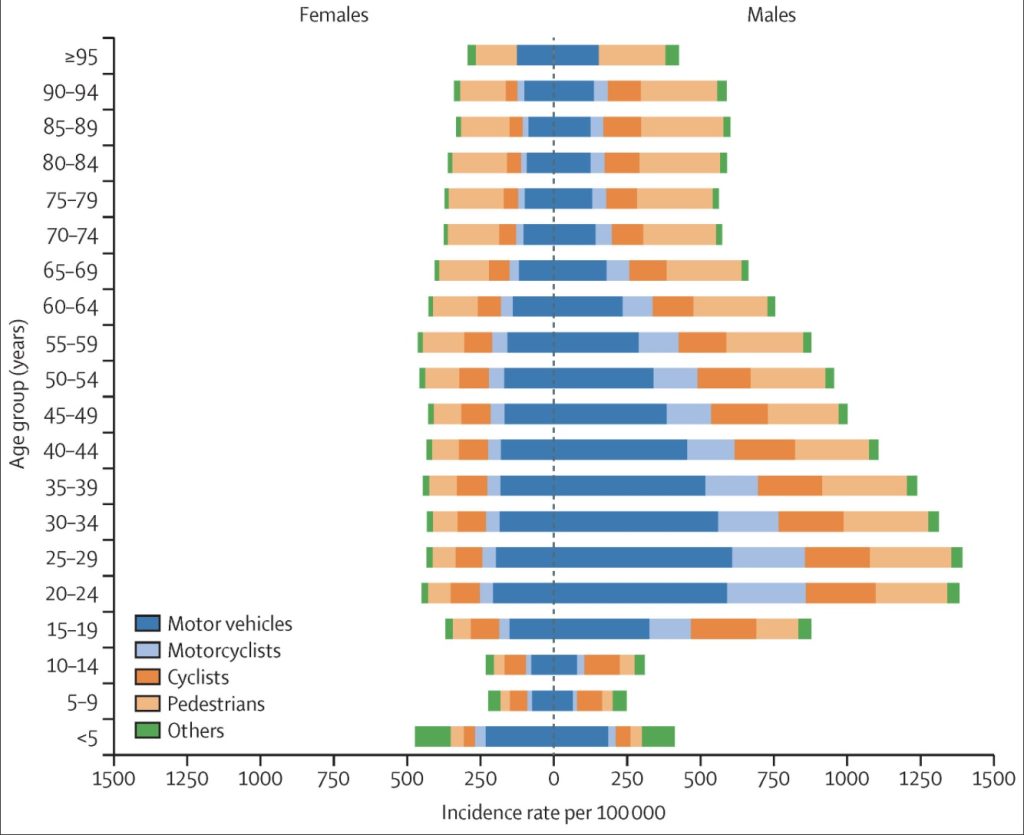
Motor vehicle crashes accounted for the largest share of both road injuries and deaths worldwide, causing 19.8 million injuries and 518,000 deaths in 2023. Pedestrian injuries caused nearly one-third of road injury deaths, while motorcyclist injuries represented just 13% of cases but nearly 24% of deaths.
The study found substantial differences in injury severity. Fractures were the most common non-fatal injury, accounting for more than 38% of cases, while head injuries occurred in roughly one in ten cases. Motorcyclists experienced the highest proportion of head injuries, most of which – an estimated 734,000 cases - were moderate or severe traumatic brain injuries. These more severe injuries were also disproportionately concentrated in low- and middle-income countries.
Dr. Liane Ong, Senior Research Scientist at the Institute for Health Metrics and Evaluation (IHME) and senior author of the study, said: “Road injury outcomes are shaped not only by crashes, but by the systems designed to prevent them and protect people when they occur. Road deaths are largely preventable, but progress requires sustained investment. Reducing them requires safer infrastructure, stronger safety policies, and better emergency care.”
For the full report and methodology access The Lancet here