
Radical Writing
We provide a platform to debate new ideas, hosting comment from writers, activists and practitioners who are reimagining social justice in the transportation and related technology space.
The most recent articles are published below, and opinion pieces are also available on our Substack.
Learning from Mineta
Standing up for safety and the vulnerable
In this guest essay, Bella Dinh-Zarr reflects on 9/11, international cooperation and the vital need to protect the most vulnerable on our roads - especially in hostile political headwinds.
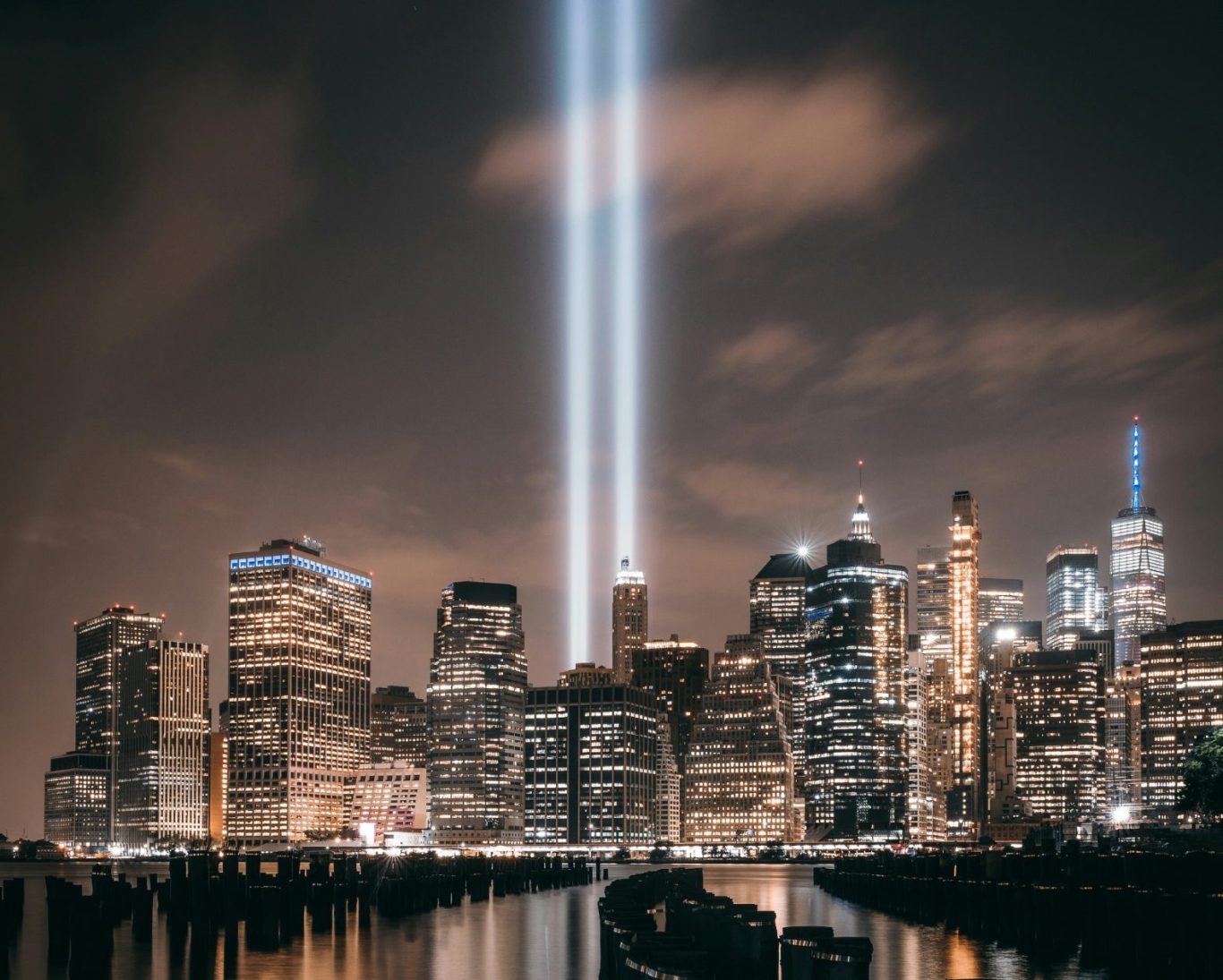
Where were you on September 11, 2001? On this 25th anniversary of a defining moment in our lives, I have been reading poignant accounts from both friends and journalists about that day. And today, on September 12, 2026, I’ve been reflecting on where I was then and what I want to do now, as a transportation professional.
Twenty-five years ago, I was a young scientist, just a month into my new job at USDOT headquarters in Washington, DC. After coming into work that morning, I saw my new colleagues clustered around the hallway screens and, together, we watched footage of the two airplanes flying into the World Trade Center. I was much too junior to have a window office, but a senior colleague’s window faced the Pentagon and, as I walked back to my desk, I saw plumes of smoke rising from across the Potomac River, where the third plane had hit.
That same morning, U.S. Secretary of Transportation Norman Y. Mineta was issuing orders to close U.S. airspace and finding airports where long-haul planes headed to the U.S. could land. He was using the power of his office and his strong relationship with other countries to protect as many people as possible.
As Mineta said in an Associated Press interview: “After I closed U.S. airspace, I realized that we’ve got these planes coming in from Europe and Asia and I then called David [Collenette, Canadian Transport Minister] and I said ‘Hey David, we need your help. He put me on hold and within a minute or so he said, ‘We’ll take them all’.”
And Canada did welcome them all, from small towns like Gander, made famous by the musical “Come From Away,” to larger cities like Halifax and Vancouver. Canadians welcomed these airplanes despite the potential danger to their own towns, and they housed, fed, and comforted passengers. In all, over 200 planes with more than 33,000 passengers landed across Canada in Operation Yellow Ribbon.
Afterwards, Norman Mineta, quietly and courageously, continued to find ways to protect people, especially the most vulnerable. Amidst political pressure to enact flight bans and detain Muslims and Arab Americans, Mineta called on commercial airlines to reject racial profiling of passengers.
At that time, I wasn’t yet involved in aviation, but as a motor vehicle safety specialist, I knew I could help save lives on the roads. I resolved to be as courageous as I saw Secretary Mineta was on 9/11. And throughout my career, which eventually involved all modes of transportation, I have worked hard to be on the side of safety and the vulnerable.
I got to know Secretary Mineta well a few years after 9/11 and was honored to have him as a mentor when he led our Make Roads Safe Campaign for Global Road Safety.
In 2008, in his Washington Post piece “An Epidemic on Wheels” (Washington Post, March 30, 2008), Mineta wrote about the 1.2 million global road deaths and how we have the power to eliminate those deaths and even more injuries. He reminded us that road deaths are preventable through political commitment to common sense solutions such as seat belt and helmet use, reducing speeding, preventing drinking and driving, improving road infrastructure and vehicle design. Mineta reminded us that the U.S. should strongly support and, better yet, take the lead in, UN efforts on road safety worldwide.
In contrast, in this year’s UN General Assembly, the U.S. was the only country that did not vote in favor of a resolution for road safety. The 162 other countries agreed to work to prevent deaths and injuries on the world’s roads - but the U.S. voted “no” … despite more than 35,000 preventable deaths on American roads every year.
Worse was to come. Despite worldwide recognition (and common sense knowledge) of the risks of excessive speed, the current U.S. DOT has removed all speeding prevention solutions from their Proven Countermeasures list, which guides U.S. States and cities on highway safety, and disparaged bike lanes as being “DEI” (Diversity, Equity, and Inclusion). In addition, millions of dollars have been removed from pedestrian safety grants, when we know that children are still dying as they walk to school. These actions will cost lives. They are the opposite of courageous and ethical.
After 9/11, many of us felt powerless. Many of us feel powerless today. We are not.
To my American colleagues I say that we can take action, we can show courage, we can do right. Speak up in support of good governance and good science in transportation. Speak to your local, state and national politicians. Speak to at least one person you know (especially someone who may disagree) about what you know is true, just, and ethical.
These are not times to “wait and see”. These are times to act. Like Secretary Mineta, we can be decisive and courageous.
Every day that we choose not to say something, not to do something, is a life lost or the start of a lifelong disability. For those of you who are already resisting (and there are many), stay strong. For those who feel paralyzed by fear (and it may be justified fear), I implore you to take action, in whatever way you can. Every action is important, and our collective, sustained action will make a difference. Join us.
"Always do right; this will gratify some people and astonish the rest." - Mark Twain
The Honorable Bella Dinh-Zarr, PhD, MPH, is a public health and transportation scientist. Nominated by President Obama, she served as Acting Chairman, Vice Chairman, and the 42nd Board Member of the U.S. National Transportation Safety Board (NTSB).
From Chekwatit Hill to First Avenue
On coach crashes and podium speeches
Two worlds don't quite meet as the UN General Assembly resolves, again, to tackle the global road safety crisis.
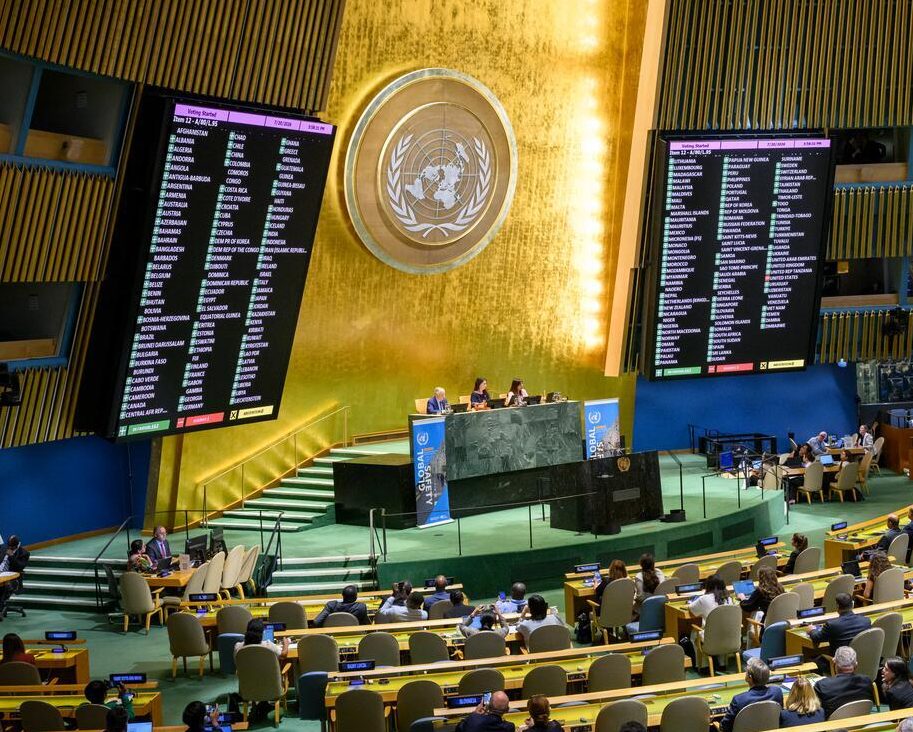
This week the United Nations convened for its second High Level Meeting on Global Road Safety.
The World Health Organization’s Director General Dr Tedros Adhanom Ghebreyesus was the keynote speaker. Annalena Baerbock, former German foreign minister, now president of the UN General Assembly, gave a moving speech, describing the “ripples of devastation” caused by the road death of a family member. Ministers and UN ambassadors took their turn at the podium. Earnest roundtables tour de tabled. Twenty-three dead children watched on, mute representatives of a many thousand others.
These children, pupils of King David Junior School in Ndejje, outside Kampala, died last Thursday evening when their bus overturned on the way home from a school trip. Mechanical failure was blamed, driver error too. Government error? Not so much. The road they died on has seen multiple serious crashes, yet nothing remedial has been done. Cash-strapped schools cut corners on bus hire and maintenance. Ministers pay lip service to road safety but cut and run when the president tells them to. Like when he needs boda boda taxi riders to stop being distracted by driver training and motorcycle helmets so they can deliver menaces for his ‘re-elections’.
The Ugandan government has responded to the coach disaster by banning school trips on buses until an investigation has been carried out. As if the president and ministers and civil servants and police and grieving parents and bloodied survivors and onlookers don’t already know the cause: political corruption, official incompetence, societal complacency, international neglect. This is the second major, multiple fatality, bus crash in Uganda just this month. It’s not like they weren’t warned.
Almost a week after the crash, the UNICEF country representative ‘broke his silence’ (as a Ugandan newspaper put it), commending the government’s post-crash response and calling for more sustained road safety efforts. “Every child has the right to travel to school and return home safely. Road safety is a child rights issue linked to survival, education and a safe environment,” he said. Question is, if a safe journey to school is a child right, what is the UN child rights agency going to do about it, practically?
Probably, not much.
And what does a crushed bus on Chekwatit Hill, Uganda, and twenty-three broken children have to do with a soon-to-be forgotten UN session in the sultry dog days of a Manhattan July?
Not enough.
And therein lies the problem. Agency inaction and UN performative resolution-making are linked. They feed off each other and create a permissive environment for government indifference and inaction, a vicious cycle of nothing much. To help deliver change UN agencies need political mandates with budgets attached. Absent that, they make statements.
Take this week’s session. The ‘high level meeting’ was mid. It was reasonably successful in its dynamic and in the media attention it secured, but it could have been so much more. In UN parlance, ‘high level’ means Head of State or Government, plus some foreign and finance ministers, a few Tech Lords, Bill Gates, and Shakira. High level meetings typically take place in September, during the high level segment of the UN General Assembly, when presidents and prime ministers come to make their set piece speeches. They don’t happen in July, when the air hangs humid and no one is around, unless the issue under discussion doesn’t much matter. The modalities document for this high level meeting spoke of deep concern and reaffirmed urgency. The urgency this week was reaffirmed at transport minister level, at best.
The subject does matter very much to those who do attend. The UN, WHO and World Bank officials who believe in preventing road traffic injuries are good people and genuinely invested, as are the NGOs urging accountability, the desperate and enraged families of victims, and the more proactive government ministers and officials. They engage with the process in New York because they have to believe, because they want to wring every last drop of precious scarce juice from the cold stone, because their presence and buy-in is necessary to securing any international attention. And because these events have a beguiling self-importance and offer some degree of self-validation.
But to the UN establishment, the hierarchy of agency DGs and ADGs, most of the Member States, it’s a box to tick, a play to act, and when the curtain falls they move smoothly on to the next thing. No emotion has been spent, except deep concern, no promises have been made, except reaffirmed urgency, and, for sure, no actual finance has been committed. Without financial commitments, governments can adopt resolutions with zero jeopardy and therefore with limited seriousness about follow through. Member States tell each other to ensure that road safety is adequately financed through domestic budgets and to encourage new financing mechanisms and greater catalytic funding for low-income countries. But they’ve been admonishing each other to do the same things for twenty years now. Nothing is binding. In this way, the UN road safety roadshow is best understood as ritual performance.
This absence of financial commitment has been diminishing. The would-be-catalytic agencies run on vapour. The hardworking but cash-strapped UN Road Safety Fund held another replenishment conference ahead of the high level meeting, raising $5.6 million. Another $7 million is apparently in the pipeline. No offence intended to the UNRSF team, who are committed professionals, stoical in the face of adversity, but such sums are a rounding error for most serious philanthropic funds. Yet the limited funding that is invested generally shows good returns. The World Bank’s road safety facility has deployed around $80 million in grants over the last 20 years and claims to have influenced around $5 billion of safer road investment by the Bank. Big development bank loans are now being invested in stand-alone national road safety programmes, for which the UN process has played a cultivating role.
But lack of finance/seriousness also means an absence of accountability. What are the various components of the UN system actually doing to deliver this second Decade of Action? Where are the staff, budgets and programmes in relevant established agencies? Where are the inter-governmental task teams? Where is the rich peer to peer dialogue engaging senior thought leaders and programmatic rain makers? These ingredients, which are an essential part of the fashionable development causes, have been largely missing. Bloomberg Philanthropies is the only member of the global health High Priesthood to seriously support road traffic injury prevention. It’s vital that it does and that it will invest more than $300 million over the next five years, a literal lifeline. Bloomberg’s ambition is to save a million lives by 2030.
The UN should be, and often is, a force for good. It is an idea, an institution, worth defending from the nihilistic sharks that now circle. But on global road safety it has so far missed an opportunity to demonstrate its reach. One and a half Decades of Action have not moved the needle because road safety was never internalised by the global development establishment. It was tolerated, condescended to. But, with the exception of the above-mentioned few UN, WHO and World Bank officials working daily on road safety, and Mike Bloomberg and his team, no one in the charmed circle ever really gave a damn about a yearly toll of a million dead, mostly poor, people.
And while the headline in New York was a 21% fall in the global fatality rate (accounting for population growth), which is something to applaud, that still leaves a million dead, mostly poor, people, the bodies piling up disproportionally in poorer countries and neighbourhoods. The real numbers, the ones that matter to the bereaved families today, are pretty much static and have been for more than two decades. The UN’s own assessment of progress towards the road safety target in the Sustainable Development Goals is that it has been ‘marginal’ and certainly inadequate to achieve a fifty per cent reduction in fatalities by 2030. Truth is, many middle- and most low-income countries are nowhere close.
That is not to say that the UN process has been a failure. These events, these milestones on the roadshow, can galvanise governments that want to listen and do something, can attract new players to the table, and can be useful hooks from which to hang new ideas. They can offer networking, dealmaking, opportunities. They can provide a platform to ministers who want to announce real progress and a helpful profile to NGOs. But there’s no mass action flowing from this UN summitry because there’s insufficient organisation and funding to enact the paper decisions.
Which is a shame, because the declaration approved by the high level meeting is excellent. It sets out with impressive clarity the policy and technical steps that need to be taken to bring the global traffic injury crisis under control. Its 48 recommendations are comprehensive. Perhaps too comprehensive. If this process is to again be truly worthwhile, it should consider using its UN convening power to target attention on a global campaign for one or two practical countermeasures that can quickly make a difference and, harnessing the lending potential of the development banks, challenge all countries to step up.
Reducing speed was the rallying cry of the 2020 Stockholm ministerial, a call to arms for default 30km/h neighbourhoods. This solution encompasses urban and highway design, vehicle technologies like Intelligent Speed Assistance and active emergency braking, police enforcement and behaviour change. It protects walkers, cyclists, the old and the young. It stands up for child rights. It allows for a reimagining and redistribution of public space. It allies with climate action and public health. It can be implemented anywhere.
Motorcycle safety, tackling the fastest rising cause of death, could be the other cause. This is vitally relevant in fast growing economies of the Global South. Helmet standards, bike quality, safety tech, road design, speed management and enforcement all play a role. There are already excellent two-wheeler partnerships delivering action in many regions and countries. Build on this. Sustained action in these areas will help to grow the political awareness and institutional capacity that can improve other aspects of road safety governance, like the inspection and enforcement regimes needed to fix Uganda’s fatal buses.
Building the political coalition from the ground up, securing the support of local authorities, city mayors, roads directors and ministers who have power and budgets to enact change, encouraging new allies to get on board by demonstrating success. This is the approach that has been shown to work. Much of this is already happening through the Bloomberg Global Road Safety Initiative, the FIA Foundation and other convening partnerships. These efforts should be vibrantly diffuse, independent and responsive to local needs but must be better coordinated so resources aren’t duplicated, and all actors are united in delivering the same end goal. It also needs an imaginative approach to unlocking private sector resource that has so far been beyond the UN process.
A high level meeting in July is not ideal, nor high level. But it is much better than being completely ignored. Many of us put serious campaigning effort into securing road safety as an issue on the UN development agenda. We need to make it count and, in a time of scarce resource and hostile political headwinds, find ways to keep forcing change.
As the UN Special Envoy for Road Safety, Jean Todt, an arch critic of inaction, put it: “Business as usual is a business of death.” Just ask the families of the children of Chekwatit Hill.
Freedom marchers
A dead child, a Court ruling and the campaign to walk in safety
Will an Indian Supreme Court ruling on pedestrian rights spark a revolution in safe footpath provision?
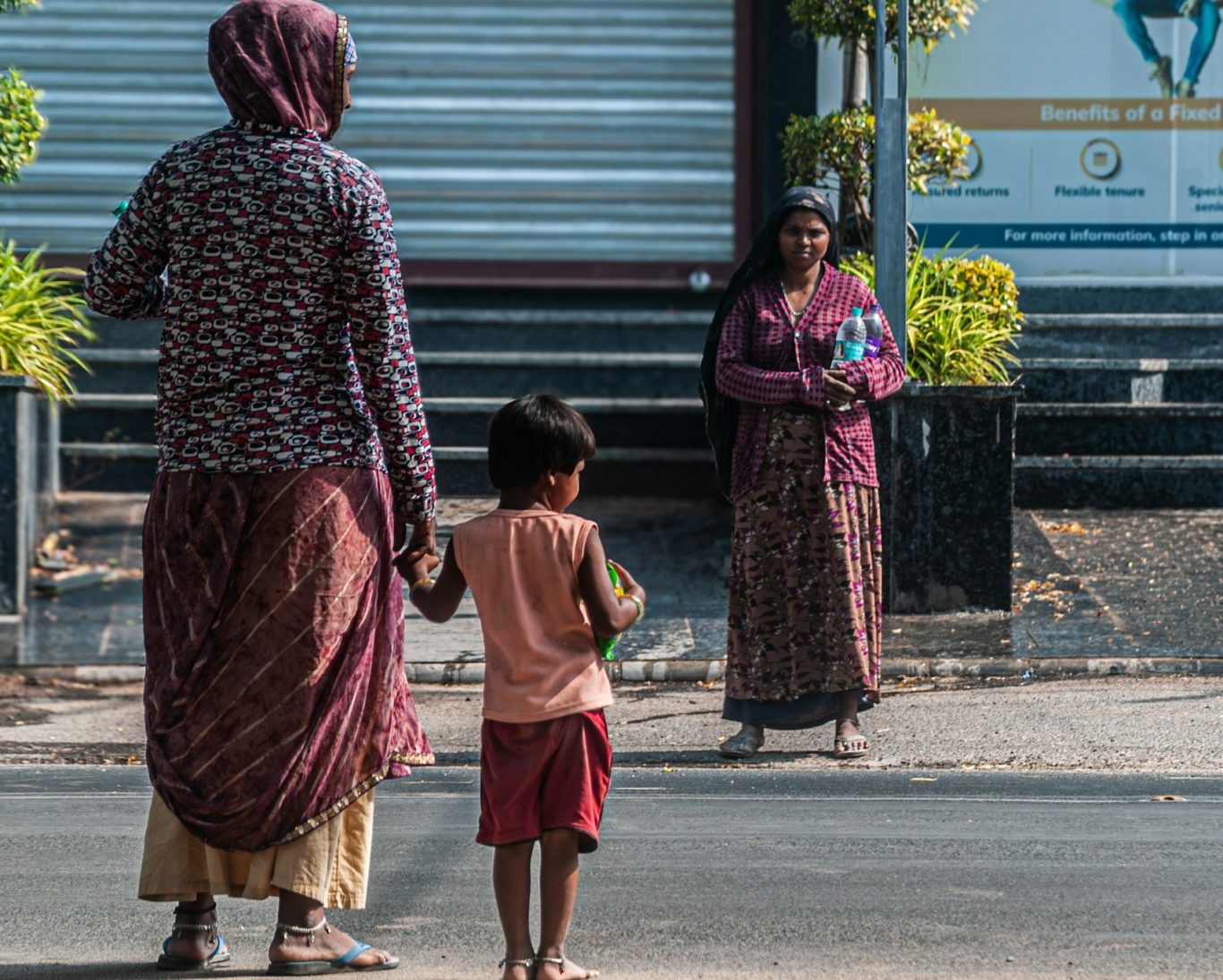
“Like any young father, the appellant lovingly readied his five-year-old son and left home at 9 am to drop him at the neighbourhood school. Who could have ever imagined that it would be the last walk with his son? As father and son were walking towards the school, a tanker came from behind and struck the boy, crushing his waist and lower body. He succumbed to the injuries. Take it for granted, there was neither a footpath nor a pedestrian crossing.”
Some ideas can change the world. Here’s one of them. Make the simple act of walking down your street a civil and human right.
Think about it. Walking is our only entirely unmediated mobility option. We pay no fee, make no purchase, require no permissions. Walking is freedom, from the time the toddler takes her first steps away from her parents. When we lose that freedom, through disability or old age, it can be shattering. The essence of freedom, as Isaiah Berlin, the great philosopher of liberty, said, “is the “absence of obstructions on roads along which a man can decide to walk.” He may have meant it metaphorically, but it is also literally true.
So why don’t we value walking more? In today’s car-centric societies walking has been relegated to a second or third division. Pedestrians are hemmed in by barriers and rules ostensibly to protect them from motor traffic but, in reality, to protect cars from people. The laws and norms set down in the 1920s, as the car revolution gained pace, are still much what we have today. Road traffic casualties in high income countries have declined by more than half since the early 1970s, but part of that achievement is the consequence of constraint: children, in particular, have lost their right to roam as a result of heavier traffic. But streets without people are also perceived as more dangerous, so women feel less inclined to walk, fears of stranger danger take hold, a vicious cycle perpetuates.
In cities where car ownership has probably reached saturation point – although autonomous vehicles may yet add to, rather than replace, traffic – there is now a politically contested trend to reclaim some public space from the car, reprioritising residential streets, repurposing urban highways, pedestrianising and greening squares and avenues. The value of the car over other indices of quality of life is being questioned in a way it wasn’t, except by a farsighted minority, at the height of the West’s car boom in the 1950s and ‘60s.
But in many middle- and low-income countries, the car revolution is still on a dominantly upward curve. Even as climate change worsens the heat, shady, walkable, tree-lined avenues are replaced with wider roads. Urban expressways are ubiquitous, a badge of ‘progress’. Pedestrians’ needs are an afterthought, if that. Rapid development in megacities of the global South attracts young people from the countryside and brings informal settlement; stressed public services and utilities; and ever more traffic onto overcrowded, unsuitable roads where cars, trucks, motorbikes and poorly regulated buses come into conflict with a huge, poor, urban population of walkers. Hundreds of thousands of pedestrian deaths are the result.
In which context the death of a five year old schoolchild in a traffic collision in India, killed by a tanker truck as he walked to school with his dad, would not normally make the headlines. Such tragedies are common. Around ten thousand Indian children are killed on the road each year, an emptied classroom every day. But this particular incident has the potential to mark a turning point, and to galvanise a step change in the way the rights of pedestrians are understood and defended. It resulted in the speech which opened this article.
Coming to the attention of the Indian Supreme Court in an insurance compensation case, Maniyar Iliyaz & Shaik Riyaz & Anr. v. P. Ayyappan & Ors, the death of the unnamed schoolboy sparked a decisive ruling by the court that safe walking, and the provision of sidewalks, is a fundamental right under the Indian constitution. The Court ruled that the right to walk is intrinsic to the freedoms guaranteed by Articles 19 and 21 of the constitution, which cover the freedom of movement and the right to personal liberty. Their summation was damning of society’s priorities:
“It could…be elitism to start with, for machines with wheels were only for the rich, but as economies progressed and cheaper motor vehicles were introduced, the entire spectrum of motorised transportation dominated the roads, pushed aside the walkers to the extent that they are treated as a nuisance for the drivers who routinely run over the walkers and their footpaths. This should stop from now on as we declare the fundamental right to walk on demarcated footpaths alongside motorised roads.”
“If a road exists, there must then be a duty to ensure that a footpath is demarcated and maintained for the walkers. This is an enforceable duty. The fundamental right to walk on demarcated footpaths shall override the privilege of a motorised vehicle.”
The Justices, PS Narasimha and Atul S Chandurkar, also recognised the special role walking has held in the development of India’s political and civil rights:
“Walking is a struggle for the not-so-fortunate, meditation in motion for many, resistance for others, discovery for the inquisitive, a cohesive strategy for sharp socio-political minds. It certainly did inspire and ignite some of the ideals of the freedom struggle…”
Resistance. Freedom struggle. The measured words of the Justices can inspire us to act, and to begin by reframing the way we think about pedestrian rights and safety. It is not only a prosaic, technical matter of road design, pavement provision or traffic hierarchy. It is, in essence, a poetic part of the eternal struggle between haves and have-nots. A righteous campaign for justice to ensure that simply trying to walk to school does not result in a death sentence. As the Justices remind us, we can summon inspiration from Gandhi’s Salt March, or the Jarrow March, or the march from Selma to Montgomery, or a myriad other peaceful protests, hundreds or thousands of feet walking in unison have the power to overthrow injustice.
The active role of civil society is crucial. Early reaction to the ruling by Indian commentators focused on the gap between rhetoric and reality. Recognising and requiring a right is but the start of the process. Implementation is everything else. As anyone who has experienced Indian officialdom knows, best laid plans can be drowned by bureaucracy and political and special interests will always try to find creative ways to stymie good intentions. India’s roads are notoriously chaotic, with basic lane discipline a concept that has not yet caught on. The traffic police sit in their airconditioned traffic control rooms watching livestreamed anarchy. Which, out on the street, they are barely able to influence. Sidewalks are often in bad physical condition, occupied by street traders and used by motorcyclists as shortcuts round the dystopian traffic jams. The safe space for pedestrians is anything but.
But India is also blessed with some effective NGOs working on traffic safety, sustainable mobility and transport equity. SaveLIFE Foundation, the Institute for Road Traffic Education (which has a much more varied portfolio than the name suggests), the Indian chapters of the International Road Assessment Programme and the World Resources Institute are four examples, and they have all been active and consistent in promoting pedestrian rights. Working through some of these organisations, Bloomberg Philanthropies provides very significant funding into the country focused on road design and speed.
Their focus will be needed to energise the stultifying bureaucracy. The Supreme Court called for the creation of a dedicated regulatory mechanism to protect pedestrian interests “to enhance and effectuate the fundamental right to walk on demarcated footpaths,” directing that a copy of the judgment be forwarded to relevant ministries for development of any necessary legislative and administrative frameworks to implement the ruling. It will require political leadership to make this mean something, and NGOs must be allied to create the political, media and societal demand for change to ensure it happens.
The Supreme Court also called on the country’s Law Commission to review the legal architecture required for protecting the right and directed that the proceedings be renumbered as a petition under Article 32 of the Constitution titled “Re: Fundamental Right to Walk and Footpath”, ensuring the issue will remain under constitutional review. This could be critical. Mexico, the first country to establish a constitutional right to safe mobility, in 2022, including a reordering of the traffic hierarchy with pedestrians first, legislated a strong legal foundation. This has proved vital for campaigners in defending the law against reaction, and in working with states, like Jalisco, willing to be proactive in introducing pedestrian-friendly design and traffic regulations.
Connecting with wider social issues like climate change and the rights of women and girls can also buttress efforts to improve walking facilities and change governing and public attitudes to walking. The Partnership for Active Travel and Health (PATH) leads a campaign urging countries to ensure walking and cycling are included in national climate strategies, with budget to match. So far, more than 40 countries have responded by including walking and/or cycling in their ‘nationally determined contributions (NDCs)’ for carbon reduction. Nepal, for example, has included a goal in its NDC for roads to be ‘safe for walking and cycling’ by 2035, which now at the very least gives walking advocates an advocacy hook. Indian based NGO Safetipin works closely with adolescent girls to map their daily walking journeys and to elevate their experience of physical and social discomfort and, sometimes, sexual harassment, into meaningful policy.
These are important initiatives, grounded in detailed policy analysis, real-world experience and focused advocacy. But for a more permanent, internalised, step change the moral case for walking as fundamental freedom has to be made and won. It shouldn’t, but probably will, take more child martyrs to get us there. The international road safety community, and campaigners for clean air, climate action and social justice can rally together behind the legal initiatives in Mexico and India, to help them succeed, and to make the case in other countries that walking is a fundamental right and should be recognised as such in law, policy, investment and in the way society encourages us to respect each other as road users.
The Indian Supreme Court issued a clarion call for change: “It is not at all difficult to imagine how a wide, well-demarcated and uninterrupted footpath can change the beauty of and equitable access to our cities and towns - this could truly be transformative of our urban and rural living. In reality, how much does it take to create a well-demarcated footpath wherever a road exists? All that the fundamental right to walk demands is a comfortable space for an easy and carefree walk. Should this not be the minimum of the minimum duty that a municipal authority owes to the citizens?”
Coldly functioning machines
The Power of the Powerless today
Welcome to the Opinion section of The Powerless.
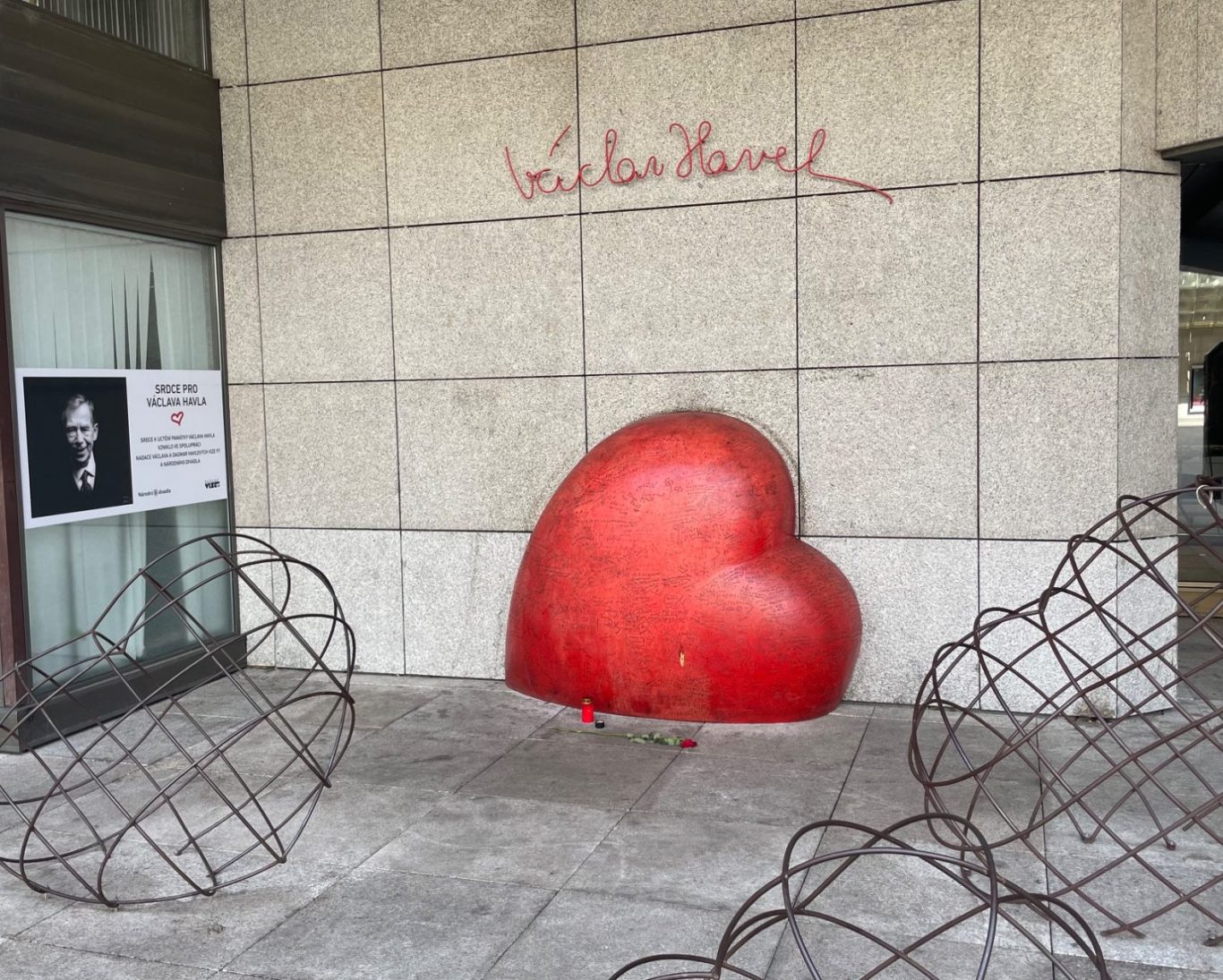
In 1978 Vaclav Havel, suppressed playwright and co-signatory of Charter 77, a courageous declaration of human rights, penned a political manifesto which exposed the fragile foundations of communist dictatorship and, through its celebration of individual freedom and existential agency, inspired activists across the Eastern Bloc.
Havel’s anti-authoritarian essay, The Power of the Powerless, was a cry of resistance against the stifling fictions of communist Czechoslovakia, and the zombified compliance of so much of the population, personified by the greengrocer who conforms by placing a ‘Workers of the World, Unite!’ placard in his shop window. Havel’s insight was to see that such empty ritual was the sticking plaster that held together the post-totalitarian edifice. Rule by fear of State vengeance or violence, yes, but also by the natural human desire to be one of the crowd, to be left in peace. Over time, accepting this societal fiction would have a deeply corrosive effect, eroding an independent sense of self and helping to perpetuate the system.
“The profound crisis of human identity brought on by living within a lie, a crisis which in turn makes such a life possible, certainly possesses a moral dimension as well; it appears, among other things, as a deep moral crisis in society” wrote Havel. "A person who has been seduced by the consumer value system, whose identity is dissolved in an amalgam of the accoutrements of mass civilisation, and who has no roots in the order of being, no sense of responsibility for anything higher than his or her own personal survival, is a demoralised person. The system depends on this demoralisation, deepens it, is in fact a projection of it into society.”
Yet even a small revolt, like removing the performative placard from the shop window, could spark change and, eventually, collapse the edifice. Havel called this revolt against authoritarian lies ‘living in truth’. He advocated lawful and peaceful protest, recognising the overwhelming odds and very real dangers facing dissidents. But small, individual, acts of resistance, even just laughing at the absurdity of the regime’s untruths, or playing unapproved rock music, or publishing Samizdat novels, would be another hole in the wall. Like many others, Havel was imprisoned for his ‘subversion’. But the wall was chipped away, in the shipyards of Gdansk, in the churches of Leipzig, and eventually on the streets of Prague.
The edifice collapsed. And if The Power of the Powerless had only been an anti-communist manifesto it might now – like Charter 77 – be an inspirational historic relic. But Havel cast his eye, and his moral imagination, beyond the borders of the Warsaw Pact, addressing what he described as “the most essential matter…
…Technology – that child of modern science, which in turn is a child of modern metaphysics – is out of humanity’s control, has ceased to serve us, has enslaved us and compelled us to participate in the preparation of our own destruction. And humanity can find no way out: we have no idea and no faith, and even less do we have a political conception to help us bring things back under human control. We look on helplessly as that coldly functioning machine we have created inevitably engulfs us, tearing us away from our natural affiliations (for instance from our habitat in the widest sense of that word, including our habitat in the biosphere) just as it removes us from the experience of ‘being’ and casts us into the world of ‘existences’.”
Havel’s defence of ecology and humanism in the face of the machine, coupled with his ethos of ‘living in truth’, brings continued relevance for The Power of the Powerless. Indeed, it is more current than ever. Almost fifty years on, as the world bakes in unprecedented heatwaves; as authoritarian governments ally with techno-fascists to develop all-seeing systems of surveillance, data and financial control; as techno-feudalists manufacture our online existence and monopolise our consumer cravings, while financing the Far Right to turn our gaze away from the unhinged greed of the very richest, to instead direct our fury on the weak and dispossessed; as we live all this, humanity, as Havel predicted, can find no way out of the mess we’re in.
We are in a moral crisis, but not because we lack religious faith or the hypocrisies of patriarchal control beloved of Putin or the J.D. Vance gang. We are in a moral crisis because we have surrendered our demos to machines. We have forgotten how to be human without their direction. The 2008 crash was the catastrophe of the semi-autonomous financial system, enabling human greed to better impoverish us. Climate change is the catastrophe of the industrial machine, enabling human comfort to better suffocate us. The mental health crises of our young people are the catastrophe of the algorithm, enabling human addiction the better to anaesthetise us, an opium slumber. What clever catastrophe will AI serve up? The machines are out of control. The machines (and their cyborgy proprietors) are very much in control.
“It would appear that the traditional parliamentary democracies can offer no fundamental opposition to the automatism of technological civilisation and the industrial/consumer society, for they, too, are being dragged helplessly along by it”, Havel wrote in The Power of the Powerless. “People are manipulated in ways that are infinitely more subtle and refined than the brutal methods used in the post-totalitarian societies.” A mirror, from 1978, of our political condition today, when liberal democratic governments, from centre-left to centre-right, seem unable to think outside the cage they find themselves trapped within.
But as we search for that elusive political conception for human control and a politics grounded in genuine freedom, ‘living in truth’ may be the place to start. Havel did not offer this as an easy option. He understood human nature. He knew truth means sacrifice. But he knew we can begin by refusing the narrative of inevitability. We are told that the forward momentum of technology requires us to step aside and allow the brainiacs of Silicon Valley and Zhongguancun to unleash their animal spirits unsupervised. Perhaps AI is not just an engorged Ponzi pyramid office assistant turning our young adults into reverse centaurs. Perhaps it will cure cancer. Great. Let’s regulate for guardrails and safeguards that allow AI to pursue that goal on behalf of humanity. Let’s conduct diplomacy and negotiate arms control treaties to prevent autonomous weapons. Let’s think seriously and long about the societal value of autonomous cars, what they can do to enhance our lives (and it's possible they can), before letting too many of them loose on our streets.
The balance of power is always shifting. Democracies, and the civil pressure groups within them, can assert. We are beginning to see regulation of social media, to prevent the platforms from accessing children’s malleable minds. We have seen outrage at Grok undressing women. We have seen Amazon workers attempting to unionise. We have seen anti-Meta lawsuits on behalf of damaged children. We see the scientific community standing firm in the face of climate denialism. Living in truth. These are all small cracks in the edifice, chinks of light. The more we organise, the louder our voices, the stronger the resistance.
It begins by deciding to live in truth. But Havel understood that not all of us have the time or inclination to be a political activist, hence his story about the individual agency of the greengrocer removing a sign. His point was that we can all play our part. Today that might mean we purchase less from Amazon, shop local. Refuse the blandishments of automakers, choose a smaller car. Walk more, drive less. Put down the phone, pick up a book. Boycott X and its far-right owner. Vote for people who speak their own truth, rather than parroting party positions. Don’t tolerate bought politicians. Avoid easy ideological group-speak, of whatever persuasion. Take a stroll under trees, breathe fresh air, love who you love. It’s a small start. But it’s how we begin to reclaim our humanity, and destiny, from the machine.
Vaclav Havel would draw a red heart as part of his signature. It became his motif. Today there’s a memorial to him in Prague, at the national theatre, in the rather nondescript modernist square which bears his name: a glowing red heart defiant amidst the concrete.
The human heart – still our best defence against the coldly functioning machines.