
Walking is a fundamental right, says Indian Supreme Court
The death of a five year old schoolchild in India has sparked a decisive ruling by the country’s Supreme Court that safe walking, and the provision of sidewalks, is a fundamental right under the constitution.
Ruling in an insurance compensation case relating to the death of the child, killed by a tanker truck after he had no choice but to walk in the road, the Court ruled that the right to walk is intrinsic to the freedoms guaranteed by Articles 19 and 21 of the Indian Constitution, which cover the freedom of movement and the right to personal liberty.
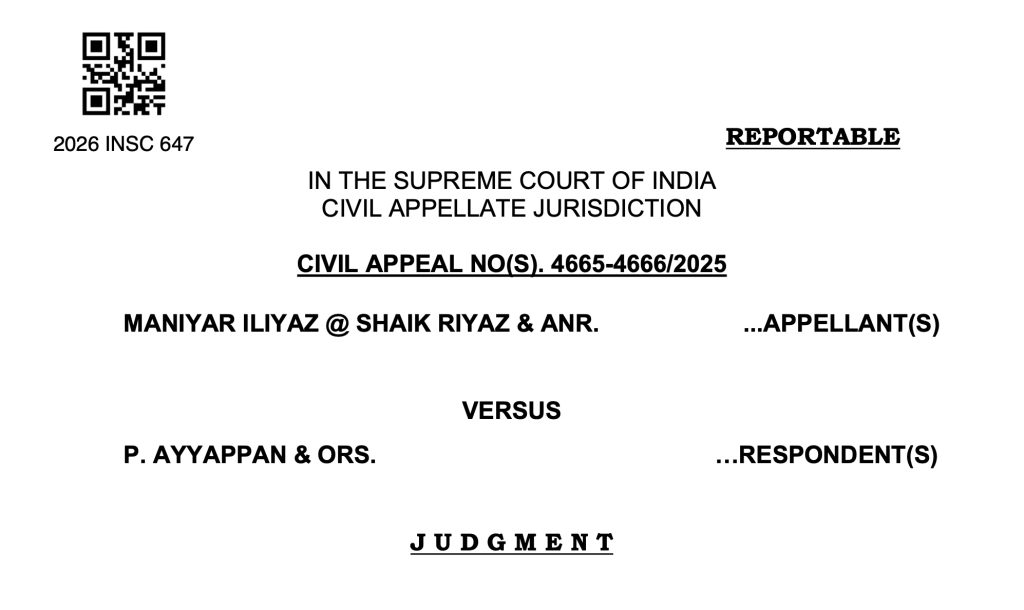
The Court’s judgement, issued on 19th June 2026, opened with a statement which recognised the human cost and tragedy that is so often the consequence of a neglect of walking infrastructure:
“Like any young father, the appellant lovingly readied his five-year-old son and left home at 9 am to drop him at the neighbourhood school. Who could have ever imagined that it would be the last walk with his son? As father and son were walking towards the school, a tanker came from behind and struck the boy, crushing his waist and lower body. He succumbed to the injuries.
Take it for granted, there was neither a footpath nor a pedestrian crossing.”
“If a road exists, there must then be a duty to ensure that a footpath is demarcated and maintained for the walkers. This is an enforceable duty. The fundamental right to walk on demarcated footpaths shall override the privilege of a motorised vehicle,” the Court ruled.
“It could also be elitism to start with, for machines with wheels were only for the rich, but as economies progressed and cheaper motor vehicles were introduced, the entire spectrum of motorised transportation dominated the roads, pushed aside the walkers to the extent that they are treated as a nuisance for the drivers who routinely run over the walkers and their footpaths. This should stop from now on as we declare the fundamental right to walk on demarcated footpaths alongside motorised roads,” the Supreme Court said.
The Justices, PS Narasimha and Atul S Chandurkar, recognised the special role walking has held in the development of India’s political and civil rights: “Walking is a struggle for the not-so-fortunate, meditation in motion for many, resistance for others, discovery for the inquisitive, a cohesive strategy for sharp socio-political minds. It certainly did inspire and ignite some of the ideals of the freedom struggle…” they remarked.
The Court called for the creation of a dedicated regulatory mechanism to protect pedestrian interests “to enhance and effectuate the fundamental right to walk on demarcated footpaths,” emphasising the need for institutional expertise, accountability and transparency in ensuring protective pedestrian infrastructure.
The Supreme Court directed that a copy of the judgment be forwarded to relevant ministries for development of any necessary legislative and administrative frameworks to implement the ruling. It called on the Law Commission to review the legal architecture required for protecting the right and directed that the proceedings be renumbered as a petition under Article 32 of the Constitution titled “Re: Fundamental Right to Walk and Footpath”, which ensures the issue will remain under constitutional review.
The ruling could prove transformative in the way government authorities are required to consider and prioritise infrastructure and planning. The Supreme Court issued a clarion call for change: “It is not at all difficult to imagine how a wide, well-demarcated and uninterrupted footpath can change the beauty of and equitable access to our cities and towns - this could truly be transformative of our urban and rural living. In reality, how much does it take to create a well-demarcated footpath wherever a road exists? All that the fundamental right to walk demands is a comfortable space for an easy and carefree walk. Should this not be the minimum of the minimum duty that a municipal authority owes to the citizens?”