
UNEP: Combine climate and clean air action for economic dividend
Every US$1 invested in tackling climate change and air pollution together can generate around US$15 in economic benefits, according to a report published this week by the UN Environment Programme (UNEP) and the Climate and Clean Air Coalition (CCAC).
The report Hidden assets: The economic and health case for climate and clean air action is the first comprehensive global economic assessment of integrated climate and clean-air action. It finds that the economic benefits of tackling the issues in an integrated way is higher than tackling climate and clean air separately, including both market and non-market economic gains.
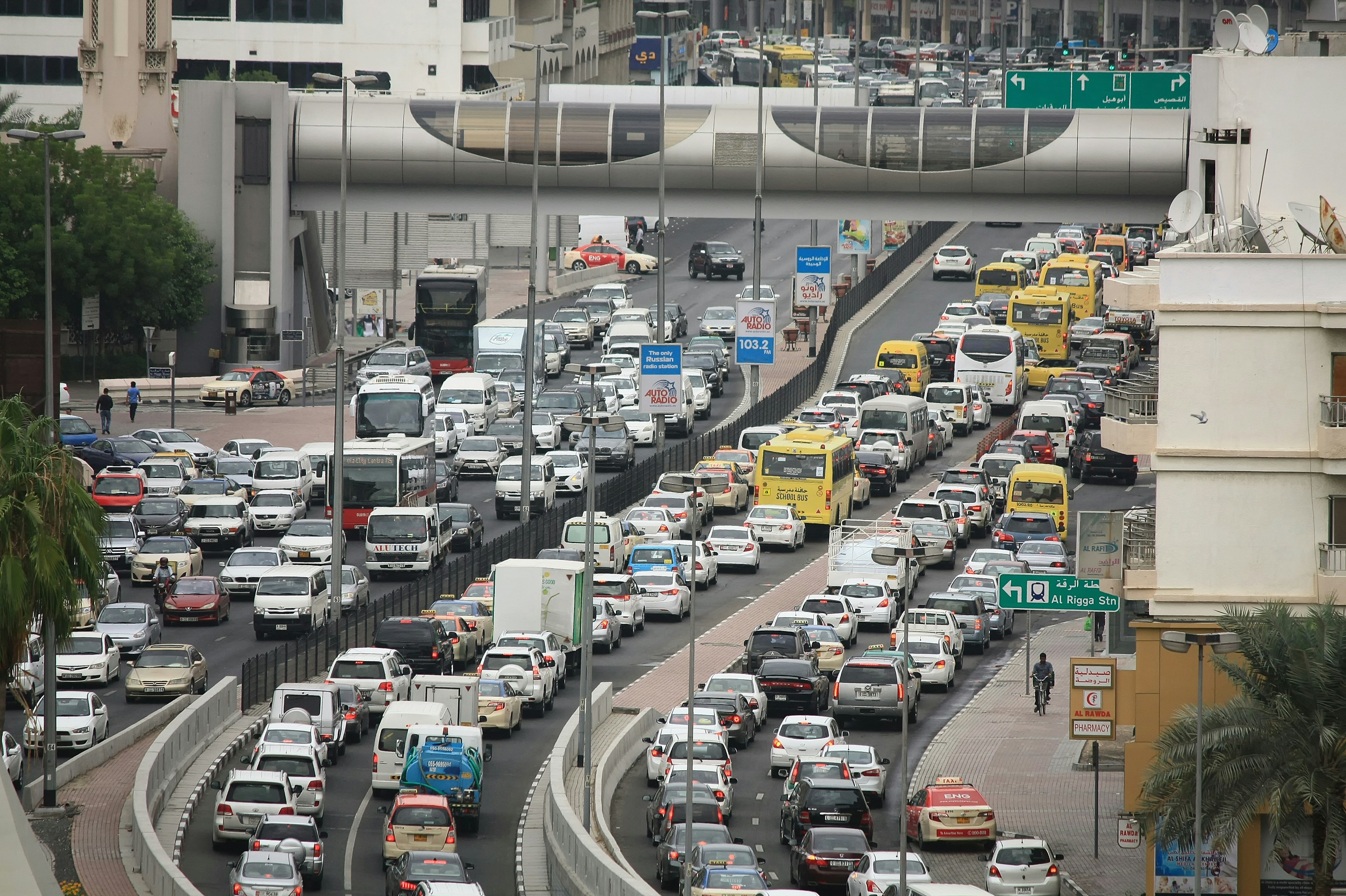
Reducing vehicle emissions, improving vehicle inspection and maintenance and accelerating the switch to electric vehicles are three of the 25 actions the report recommends across six sectors - energy and fossil fuel systems, industry, transport, agriculture and food systems, residential cooking and heating, and waste management. These combine both long-term decarbonisation measures and measures that target super pollutants such as methane, black carbon, and hydrofluorocarbons (HFCs).
By 2050, full implementation of the 25 measures could cumulatively prevent 144 million air pollution related premature deaths, including 96 million from ambient air pollution alone, and hundreds of millions of cases of chronic disease. Compared with the report’s baseline scenario, immediate implementation of the measures would halve global carbon dioxide emissions by 2050, reduce methane emissions by 60 per cent and cut major air pollutants – including black carbon, sulphur dioxide, and nitrogen oxides — by around 70 per cent.
As a result, UNEP says, the annual economic benefits of implementing 25 measures across different sectors identified in the report identified would be equivalent to 2.8 per cent of global GDP in 2035, 4.5 per cent of global GDP in 2050 and 11.4 per cent of global GDP in 2100. In comparison, the report says, 2.18 per cent of global GDP was spent on explicit fossil fuel subsidies in 2022 and 9.3 per cent of global GDP was spent on healthcare in 2023.
Beyond the solutions considered in detail, the report also describes other significant additional opportunities to reduce air pollution and greenhouse gas emissions. Urban transport systems, including public transport and enabling active mobility, are highlighted as an important example.
“For too long, we have treated climate action as a cost to be managed and air pollution as the unfortunate outcome of development. This report shows the opposite: clean air is a key driver of development, health, food and energy security, and climate stability – an asset we must invest in,” said Inger Andersen, Executive Director of UNEP. “Proven solutions already exist. What we lack is the decisive leadership from governments, financial institutions, and businesses to deliver them with the speed and coordination this crisis demands.”
Yet leadership is still lacking. The report warns that institutional barriers – including fragmented decision-making, limited enforcement capacity, and weak government coordination – are the most significant of the implementation barriers identified. Cumulatively, these barriers risk delaying full implementation by almost eight years globally.
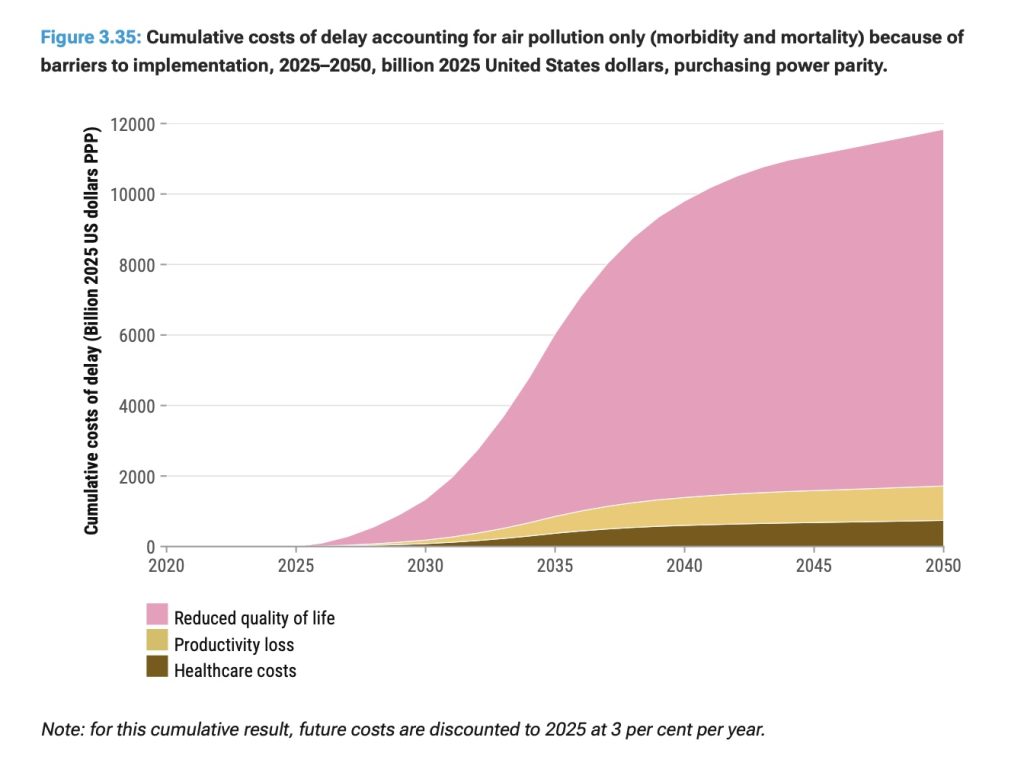
Every year of delayed action would forgo more than US$1.5 trillion annually - 0.5 per cent of GDP - in combined market and non-market benefits. Addressing them including through fiscal policy incentives and regulation that enable private sector to roll out technologies that are both profitable and reduce emissions, could accelerate deployment and unlock up to US$10 trillion in additional health benefits by 2040.
The report calls for integrated climate, air-quality, health and economic planning, stronger institutions and enforcement, and better alignment of public and private finance
Report image copyright UNEP
Photo by Iwona Castiello d'Antonio on Unsplash