
Traffic pollution is a global killer, warns ICCT
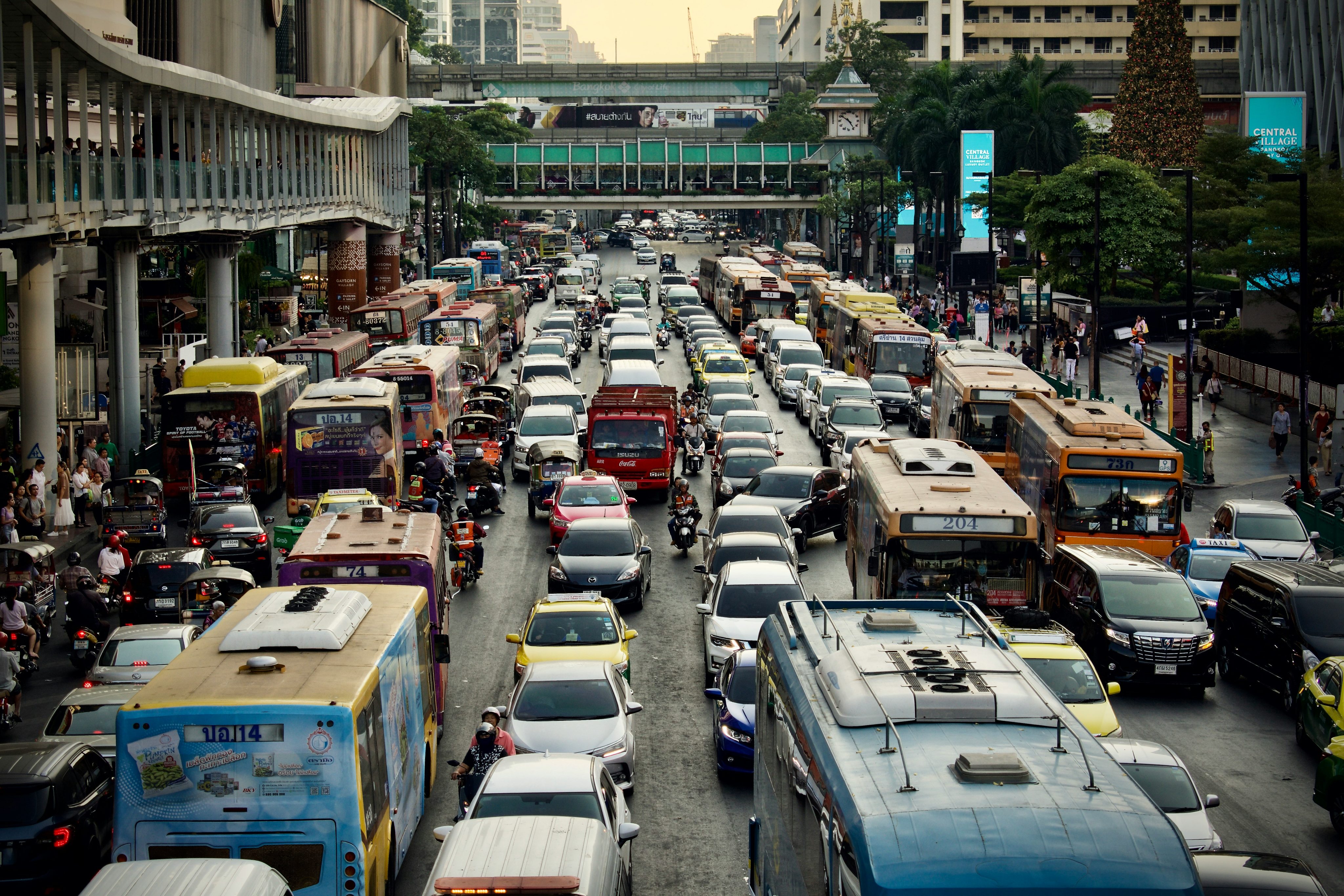
Emissions from road transport contribute to a premature death every 45 seconds and trigger a new childhood asthma case every 2 minutes, according to a new report from the International Council on Clean Transportation (ICCT).
The report, Health Benefits of Zero-Emission Transport Through 2050, finds that without an accelerated transition to electric vehicles the death toll will increase 74% by 2050. However, an ambitious strategy of vehicle electrification could reduce premature deaths by 63% and childhood asthma cases by 80%, preventing 8.8 million premature deaths between now and 2050, according to the study.
Lead author Lingzhi Jin said: “In 2024 alone, road transport contributed to nearly 700,000 premature deaths and 250,000 new childhood asthma cases globally. What makes this especially troubling is the trajectory: as high-income countries clean up their vehicle fleets, low- and middle-income countries are on track to bear a growing share of the harm — widening, not closing, global health inequity.”
Unless action is taken, road transport, which accounts for nearly half of the World Health Organization’s annual guideline for outdoor fine particle pollution, threatens to deepen global health inequity. While high-income countries are projected to see a 48% decline in premature deaths linked to road transport under current policies by 2050, upper-middle income countries are slated to see a more than 50% increase and low-and lower-middle income countries could see increases of more than 200%.
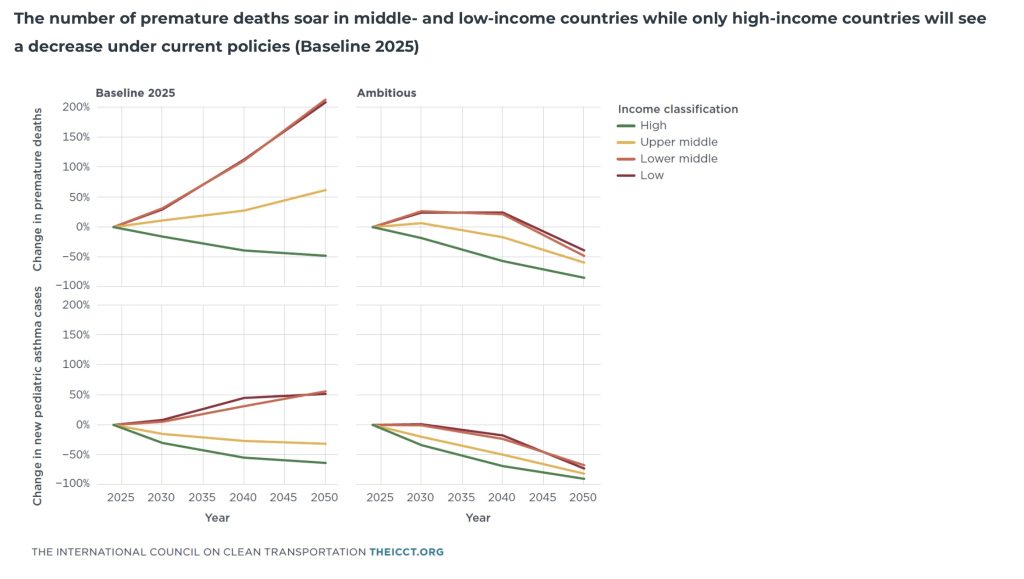
Yet the ICCT report calculates that, with an ambitious electrification scenario in which nearly all new vehicle sales are zero-emission by 2045, countries at all income levels would see substantial decreases in road transport-attributable premature deaths and new paediatric asthma cases by 2050, and the equity gap would dramatically shrink.
The ICCT concludes that a rapid and global transition to zero-emission vehicles represents one of the most impactful policy levers available to simultaneously address climate change and air pollution-related health impacts from road transport. Complementary measures — including advanced emission standards, cleaner fuels, and policies targeting older in-use vehicles such as fleet renewal programs, retrofits, and low-emission zones — can deliver crucial near-term health benefits and accelerate the benefits of electrification, it says.
Access the report here https://theicct.org/publication/health-benefits-of-zero-emission-transport-through-2050/
Photo by shun idota on Unsplash