
SUVs kill more pedestrians, but do drivers care?
Up to 400 pedestrian deaths a year in the US may have been caused by the increasing size of vehicles, according to research commissioned by the New York Times.
Analysing computer simulations and crash tests conducted for the newspaper by Forensic Rock, and reviewing industry and government data, NYT reporters conclude that 200-400 avoidable deaths each year have resulted from the ubiquity and popularity of taller SUVs and pick-up trucks, around 10% of overall pedestrian fatalities. This tallies with other surveys which show that SUVs are deadlier than normal-sized cars, particularly for child pedestrians.
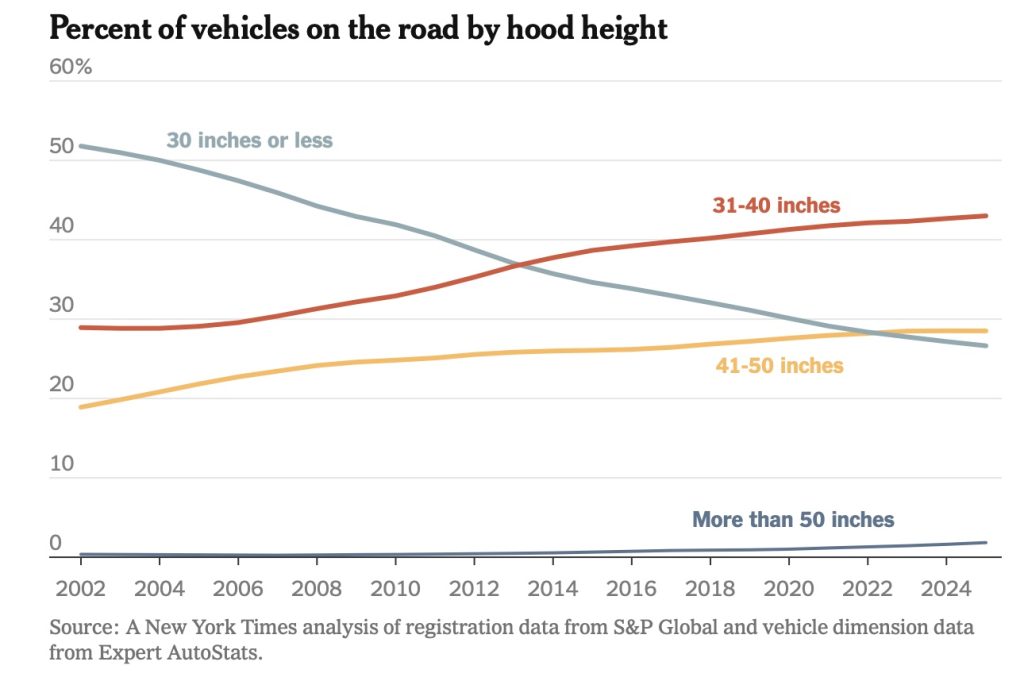
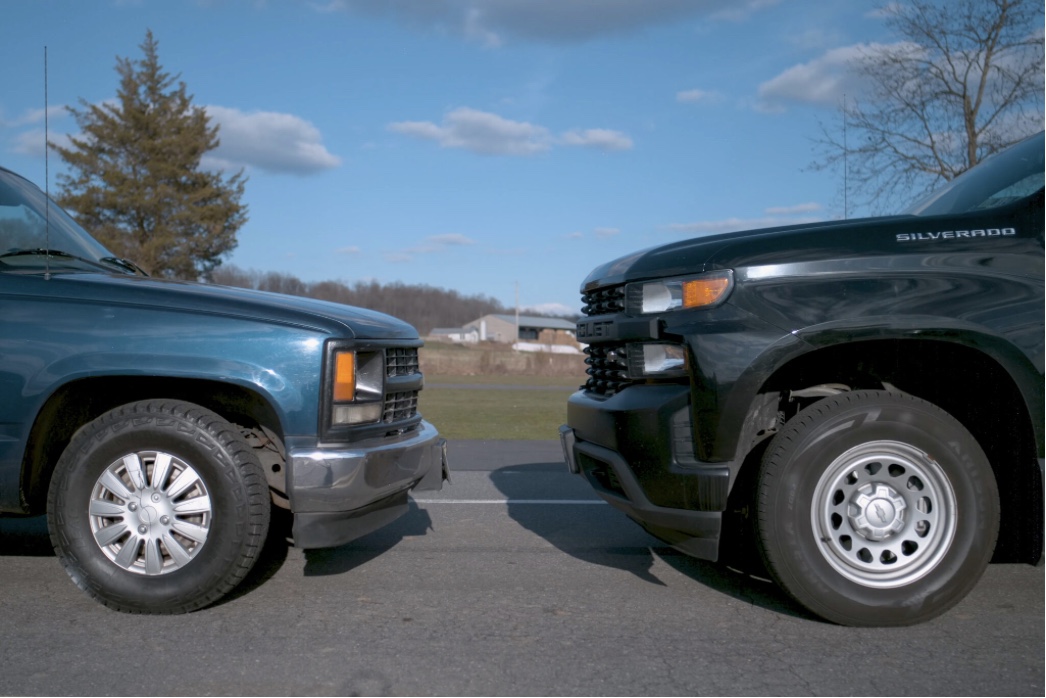
Crash impacts have become more lethal because higher car fronts hit pedestrians on the head and chest rather than the legs and tend to drag the victim under the vehicle. Height and heavier frames have reduced visibility. The NYT found that the blind spot of the Chevrolet Silverado has almost doubled since the early 2000s, while visibility on the GMC Sierra and Toyota Tacoma reduced by around 60%. As the Insurance Institute for Highway Safety has found, crossing pedestrians are particularly vulnerable to SUVs making left turns. Forensic Rock staged crashes with 1998 and 2021 model Silverados, showing that the latter has significant, if subtle, blind spot issues compared with the earlier car.
In the wider context of a dysfunctional road network designed almost exclusively for motor vehicles – fast, wide highways, inadequate crossing points – US pedestrian deaths have increased by more than 70% since 2009. For motor manufacturers, as the NYT points out, profitability is a bigger incentive than pedestrian safety. The average price of a pick-up is double that of a sedan car.
But do drivers care about the human impact of the purchase choices they make and the size of the vehicles they drive? Research by the University of Swansea with 2000 car buyers in the UK suggests not. As reported in The Guardian, when informed about the elevated risk of SUVs to pedestrians, 95% of respondents still intended to purchase an SUV.
Photo copyright New York Times