
South Africa and Brazil lead UN coalition against inequality
A group of countries meeting at the UN General Assembly has advanced plans for an International Panel on Inequality (IPI), aiming for a UN resolution to establish the panel of experts to provide evidence and recommendations to combat global inequality.
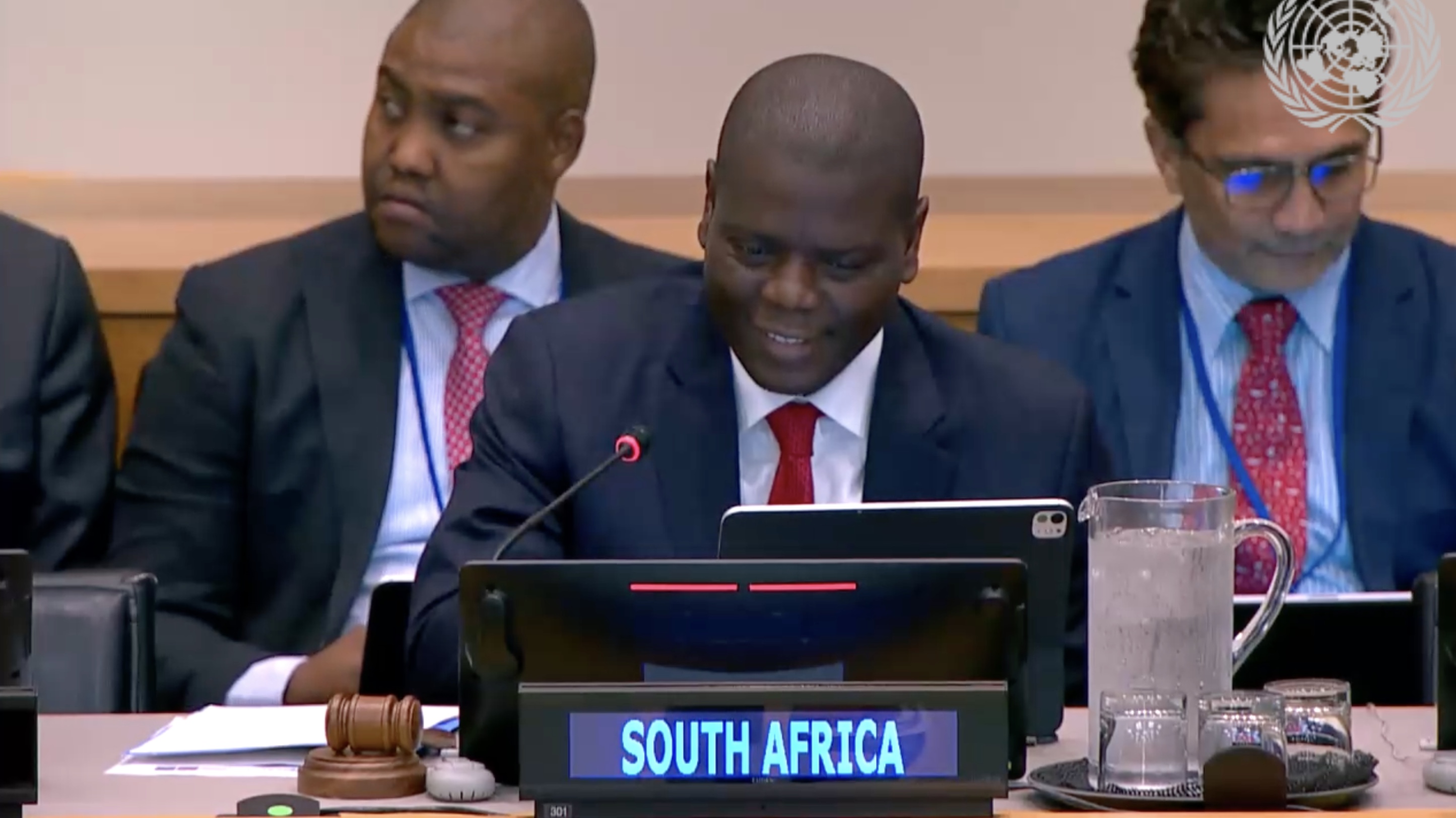
Arising from South Africa’s G20 presidency in 2025, and recommendations from Brazil’s presidency the previous year, the proposal for an IPI has strong support from a group of countries, as well as a committee of experts on global inequality chaired by Professor Joseph Stiglitz. More than 350 economists and academics have endorsed the proposal for the IPI. The 23rd September roundtable was chaired by Ronald Lamola, South Africa’s Minister of International Relations and Cooperation, and Mario Vieira, Minister of Foreign Affairs of Brazil, together with the governments of Spain and Norway. Germany, Mexico, Barbados and Bangladesh were amongst the other governments supporting the push.
Addressing the meeting UN Secretary General Amina Mohammed said: “We see breathtaking levels of income and wealth inequality, with the richest 10% of the world's population now earning 75% of all wealth. We see unequal access to basic needs like housing, health care, nutrition and education. And we see inequality when some countries develop and prosper while others fall behind.
This emergency could get worse and fast. The breakneck emergence of frontier technology and the concentration of this technology's wealth and power in a tiny number of hands could unleash global inequality at a scale far beyond anything that we have seen. Unchecked inequality will further corrode democracy as the ultra-wealthy and companies take control, wield outsized influence over the media and information landscape. and a world where only a few powerful countries can exert control over global security and the global economic architecture is a ticking time bomb.”
Speaking to the meeting via video, Prof. Stiglitz explained the proposed role of the IPI. “The IPI stems from two core foresights. First, inequality within and between nations is a collective threat to the functioning of our economies and their ability to support human dignity. I talk primarily here of economic inequality, but we know that inequality affects people differently due to race, gender, social class, ethnicity, and geography.
Inequality is not a problem limited to the economy. At a global and national level, it puts extreme stress on our politics, our societies, and the very ecological basis of our civilization. And that leads me to the second insight. This kind of global stress is akin to the crisis of climate change and needs to be very much better understood and studied in the same way. While the IPI will ultimately be designed and run differently, the concept of an Intergovernmental Panel on Climate Change is a useful analogy. The IPI would be an independent body of experts who can assess, synthesize, and present trusted knowledge and analysis on inequality, its drivers, nature, consequences, and policy solutions to address it.”
Image: copyright UN TV