
SDG mobility targets off-track, says UN report
Targets set by the United Nations to reduce road traffic fatalities and improve access to sustainable public transport are behind schedule, according to a performance review coordinated by UN Stats.
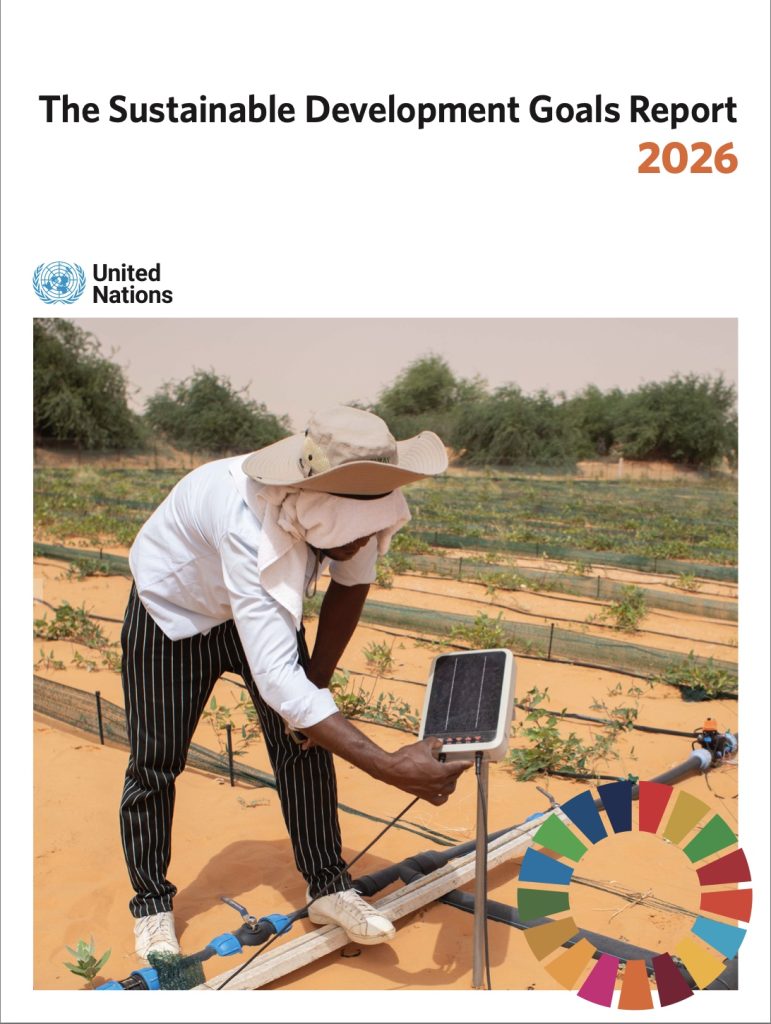
With five years remaining until the 2030 deadline for the Sustainable Development Goals (SDGs), the UN statistical body has published a progress update to coincide with the High Level Political Forum, an annual meeting which brings together governments to review SDG progress and pledge action.
The report warns that access to urban public space is declining, risking damage to quality of life. Urban expansion is rapidly consuming public spaces, as sprawl displaces ecosystems and densification leaves little room for parks and green spaces. Data from 414 cities in 126 countries show that progress is limited, with the share of urban land allocated to streets and open spaces rising marginally from 16.6 per cent to 17 per cent between 2020 and 2025 – far short of the recommended 30 to 45 per cent. Overall, streets account for 15 per cent of urban land and open public spaces for just 2 per cent.
Data from 412 cities across 127 countries show the share of urban residents with convenient access to public transport rose from 53.2 per cent to 61.5 per cent between 2020 and 2025. However, those gains were modest in the context of rapid urbanisation and growing demand. Progress has also been far from even, particularly in sub-Saharan Africa where access remains lowest.
Even in cities with public transport, the report warns, the systems serving most residents are low-capacity, limiting how many people they can move efficiently.
Buses make up 78 per cent of public transit options, while higher-capacity systems like rail and metro account for just 22 per cent, a gap driven by a persistent lack in investment, infrastructure and long-term planning. Lower-income populations are filling the gaps in provision with informal and semi-formal transit systems that can be unsafe, unreliable or exclusionary.
Linked to this, UN Stats describes overall progress towards the road safety target of halving road traffic fatalities and injuries as ‘marginal’, with significant acceleration of effort needed. The report does point out that “despite population growth and increasing vehicle fleets, global efforts to enhance road safety have led to progress in reducing road traffic fatalities. The number of road traffic declined modestly by 5.5% from 1.25 million in 2010 to 1.18 million in 2021. However”, the report goes on to say, “this rate of reduction remains insufficient to achieve the United Nations Decade of Action for Road Safety 2021–2030 goal of reducing fatalities by half by 2030.”
The report does highlight progress in some of the broader development goals. For example, mortality in children aged five and under has reduced by 51 per cent since 2000 and 13 per cent since 2015. Neonatal mortality has also dropped substantially, reaching 17.2 deaths per 1,000 live births in 2024, down 43 per cent since 2000 and 11 per cent since 2015. As a result, 134 countries had already achieved the SDG target for under-5 mortality by 2024, with 6 more on track to meet it by 2030.
The report also claims that improved data collection, management and coordination has been a strong legacy of the SDGs. “When the SDG framework was first established, nearly 40 per cent of indicators lacked internationally agreed methodologies. Today, every indicator has an agreed statistical methodology. Perhaps the most enduring legacy of the SDGs is not the indicator framework itself but the strengthening of national statistical systems. Many countries have established SDG coordination mechanisms, developed national reporting platforms, improved data-sharing arrangements and expanded the use of administrative records, geospatial information, citizen data and other innovative sources”, the report says.
Antonio Guterres, UN Secretary General, said: “As this report demonstrates, just 36 per cent of the 139 assessable SDG targets are on track or making moderate progress, and 15 per cent have gone into reverse. The report calls for decisive action to correct this trajectory.”
Photo by Nils Huenerfuerst on Unsplash