
London's main shopping street goes traffic-free
The John Lewis department store on London’s Oxford Street could be seen as a bulwark against encroaching technofeudalism: employee owned, bricks and mortar, a form of industrial democracy in action.
In 1943 it hosted a different fightback. The flagship store had been gutted by incendiary bombs in 1940, during the Blitz. Amidst the ruins a temporary shelter was built and here an art exhibition, For Liberty, was held, organised by the Artists International Association (AIA). For Liberty was themed around the ‘Four Freedoms’ proposed by US President Franklin Delano Roosevelt as the post-war promise: freedom from fear, freedom from want, freedom of worship, and freedom of speech and expression.
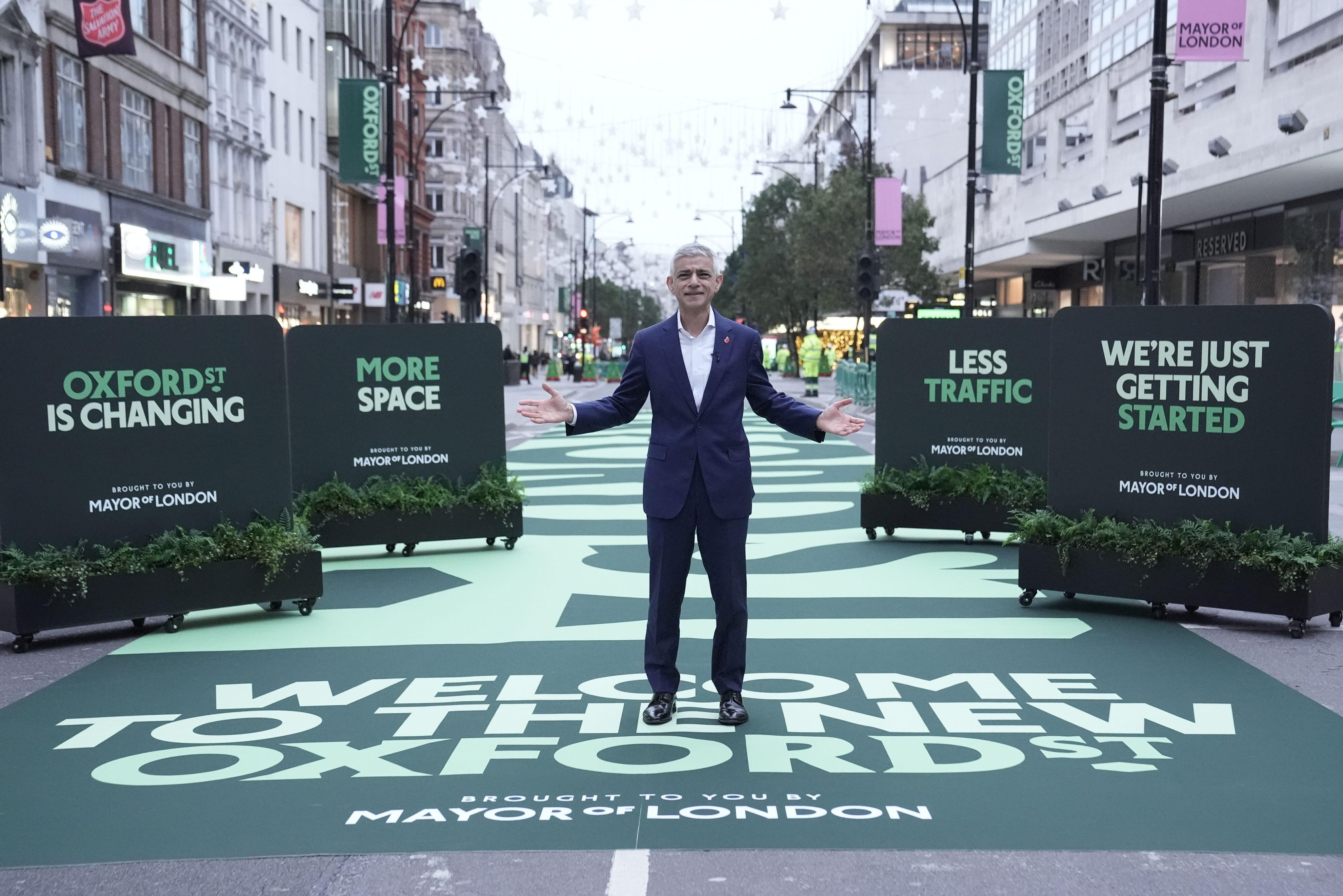
As of today the store looks out on a different freedom: from traffic. A kilometre of London’s main shopping street between Orchard Street and Great Portland Street is now pedestrianised - closed to private motorised vehicles, buses, taxis, private hire vehicles, cycles, scooters and the noisily vulgar tourist pedicabs which plague the West End. “Having served Oxford Street for over 160 years, we've seen plenty of change, and the move to make the area more pedestrian-friendly is one of the most exciting”, says John Lewis COO Naomi Simcock.
The first stage of the pedestrianisation project will see the introduction of a temporary ‘transitional scheme’, while enabling public feedback to help refine the final designs for a traffic-free Oxford Street. The project, which is supported by central government, major local businesses and around 70% of respondents to a consultation, is intended by the mayor to create a world-class destination for visitors to the street, combining flagship retail with workplaces, leisure, culture and hospitality to increase footfall and visit duration.
Buses, taxis, bikes and other motor vehicles are being diverted onto nearby roads. The impact of the scheme on congestion, road safety and air quality in these streets will be monitored by Transport for London (TfL). The impact on accessibility for elderly and disabled visitors will also be under examination. New bus stops have been situated approximately 200 metres from the traffic-free area to enable people wishing to visit the area by bus to do so easily and conveniently. Emergency services will have access to the street at all times, while deliveries can be made in the traffic-free area overnight.
This is the first stage of a phased delivery programme, with minimal construction occurring during the busy Christmas period. But by the end of spring 2027, visitors to Oxford Street should expect to see more than 50 new trees, two new public squares and better signage. More than a hundred new seats, dining tables and new lighting will also be installed.
Mayor of London, Sadiq Khan, said: “I’m hugely excited to see my bold vision for Oxford Street coming to life from today. It is a truly momentous occasion for the capital. I encourage everyone to explore and enjoy the newly traffic-free street, as we create a new vibrant destination that welcomes Londoners and visitors from around the world.
“For centuries, Oxford Street has reinvented itself, adapting to changing times and helping shape British culture along the way. There has been talk of pedestrianising Oxford Street for decades. After so many false dawns, and now working with a Government who share the scale of my ambition, I’m proud that we’re finally unlocking a new era for the street.”
Photo: Stefan Rousseau/PA