
African media forum aims to reshape road safety reporting
The World Health Organization (WHO) and the Centre for Journalism Innovation and Development (CJID) have organised an African media forum on road safety, aimed at kick-starting the development of the continent’s first road safety media guidelines.
Nearly 250,000 lives are lost to road crashes in Africa each year, around one death every two minutes. The African region accounts for a fifth of the world’s fatalities yet has only 3% of all registered vehicles. Road deaths are also increasing in Nigeria, which has the region’s highest fatality numbers at over 36,000 deaths per year.
“This is about closing the gap between science and story. It’s about correcting misperceptions on an urgent and preventable health crisis and driving accountability for action that saves lives. Media leaders can change the conversation, and ultimately this drives the uptake of policies we know prevent deaths and serious injuries on our roads,” said Dr. Pavel Ursu, WHO Representative in Nigeria.
The way road crashes are framed in the media has a major impact on public demand for solutions, and the political response to that demand. Yet news reports typically obscure the fact that road deaths are preventable. Reflecting, and shaping, society’s views, they often ignore causes of fatal crashes such as unsafe infrastructure and inadequate laws, regulations, and enforcement. Embedding fatalism and a perspective that ‘accidents’ result from human error, they often fail to show that proven solutions exist.
The new media guidelines will be rooted in the proven Safe Systems approach, which combines safe infrastructure, laws, regulations, and enforcement to reduce the risk of death or injury in a crash. They will examine how mobility is changing and what must be done to keep people safe. “It’s about building safe streets for people, not fast-moving motor vehicles. It’s about making safety the top priority. The Safe Systems approach acknowledges that humans will always make mistakes on the roads, so our transport systems must absorb these errors in ways that ensure people are not killed or seriously injured,” says Dr. Nhan Tran, Head of WHO’s Violence and Injury Prevention Unit.
Speaking at the forum, Mr Dapo Olorunyomi, CEO, Centre for Journalism Innovation and Development, said editorial choices shape whether road crashes are understood as private tragedies or systemic public policy failures. “Through this forum, CJID and the WHO will work with editors, journalists, and influencers across Africa to build a shared, evidence-based standard for covering road safety, so that reporting starts holding power to account and becomes part of the solution, not just a record of the loss.”
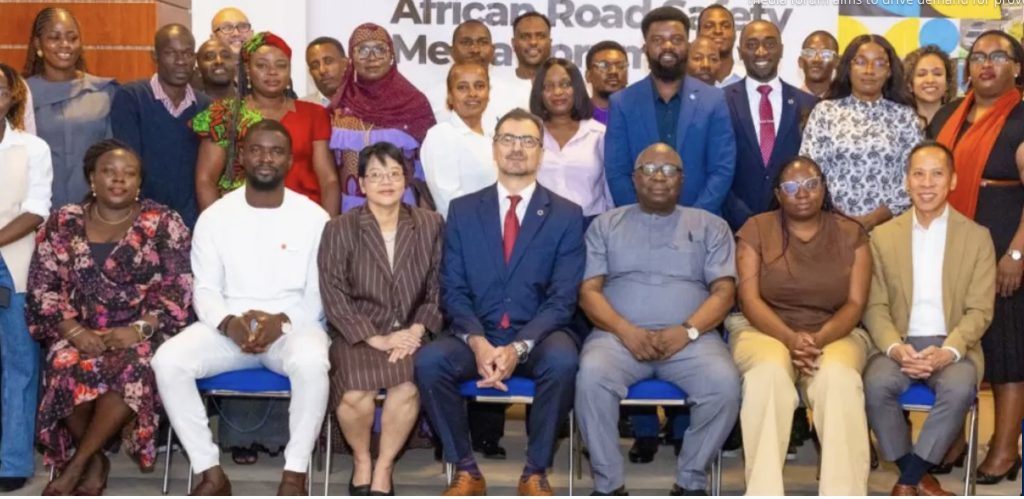
The 20 participants in the three-day forum, held in Abuja from 23-25 September, included managing editors and journalists from Ethiopia, Kenya, Nigeria, South Africa, and Uganda, as well as leading road safety experts. Participants included representatives from the BBC, AFP, Deutsche Welle, Xinhua, AllAfrica, Nigeria’s Premium Times, Kenya’s Nation Media, and the South African Broadcasting Corporation, along with leading independent content creators. The guidelines are expected to be completed in mid-2027.
Photo credits: Random Institute on Unsplash and WHO/Ochemba C